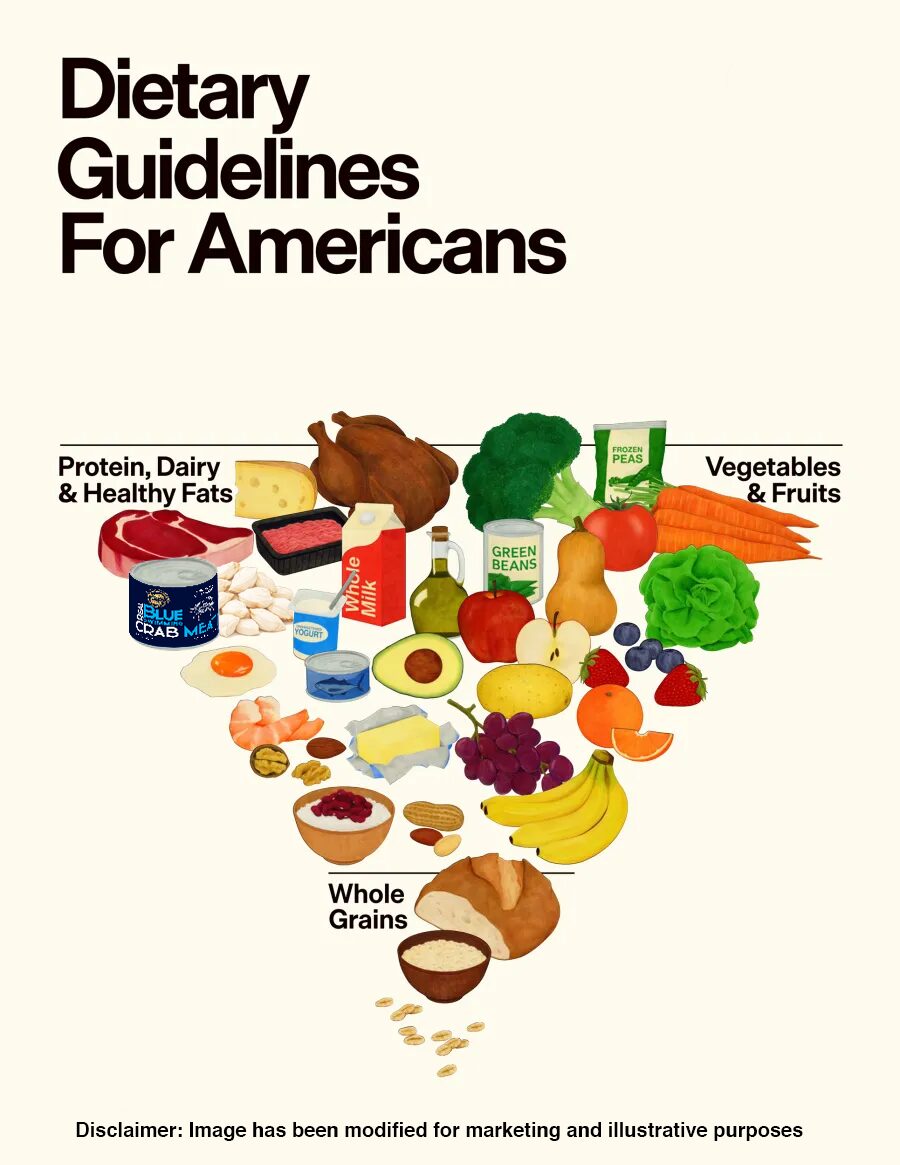

The Dietary Guidelines for Americans, 2025–2030 mark one of the most consequential shifts in U.S. nutrition policy in decades. After more than 40 years of relatively stable recommendations, the new guidelines deliver a blunt directive: eat real food. That means cutting back on highly processed products and added sugars, and rebuilding the American diet around nutrient-dense, minimally processed ingredients.
Released as part of the Trump administration’s Make America Healthy Again agenda under Health Secretary Robert F. Kennedy Jr., the guidelines reflect growing concern that federal policy has long favored “low-quality, highly processed foods.” Alongside U.S. Department of Agriculture Secretary Brooke Rollins, Kennedy framed the update as a reset, one designed to restore health while supporting American farmers, fishermen, and food producers.
Within this new framework, crab meat emerges as an ideal example of the kind of “real food” the guidelines now prioritize.
A Protein Built for the New Guidelines
One of the most notable changes in the 2025–2030 recommendations is the emphasis on higher-quality protein at every meal. Americans are now encouraged to consume approximately 1.2–1.6 grams of protein per kilogram of body weight per day, a meaningful increase from previous guidance.
Crab meat fits squarely into this updated protein philosophy:
• High-quality, complete protein with all essential amino acids
• Naturally low in saturated fat, aligning with the guideline cap of 10% of daily calories
• Minimal processing when compared with many packaged protein foods
• Highly versatile across meals from salads and bowls to soups and entrées
• Crab meat delivers protein in a whole, recognizable form, exactly what the new food pyramid is designed to encourage.
Nutrient Density Without the Sugar
Another cornerstone of the new guidelines is an aggressive stance on sugar: no added sugar is recommended, and meals should stay below 10 grams when sugar is present at all. The broader message is equally clear; stop snacking, especially on foods engineered with added sweeteners.
Crab meat naturally contains no added sugar, no syrups, and no hidden sweeteners. In contrast to many processed seafood products or prepared meals, plain crab meat offers clean nutrition without label reading gymnastics.
Supporting Healthy Fats and Heart Health
While the updated guidelines elevate healthy fats, such as those from plant oils, nuts, seeds, and fatty fish, they also stress moderation and food quality. Crab meat complements this approach well. It is:
• Low in total fat, allowing room for healthy oils like olive oil in preparation
• Naturally rich in key micronutrients such as selenium, zinc, and vitamin B12
• A strong companion to heart-healthy ingredients like vegetables, whole grains, and unsaturated fats
Prepared using recommended cooking methods: baking, broiling, roasting, or light sautéing, crab meat aligns seamlessly with the guidelines’ emphasis on flavor without deep-frying or heavy processing.
A Fit for Every Life Stage
The 2025–2030 Dietary Guidelines also emphasize tailored nutrition for special populations, and crab meat delivers value across the lifespan:
• Adolescents benefit from its protein, iron, and zinc during periods of rapid growth
• Pregnant and lactating women can incorporate crab meat as a nutrient-dense protein source alongside other foods rich in iodine and omega-3s
• Older adults who often need more protein, but fewer calories, gain high nutrient density without excess energy intake
• Individuals managing chronic disease can include crab meat in lower-carbohydrate, whole-food dietary patterns
Because crab meat is naturally lean and nutrient-rich, it supports these varied needs without the drawbacks of heavily processed alternatives.
Crab meat as a Symbol of the Reset
At its core, the 2025–2030 Dietary Guidelines are not about counting macros or chasing trends. They are about returning to foods that nourish the body without needing reformulation.
Crab meat embodies that philosophy. It is simple, recognizable, nutrient-dense, and adaptable, everything the new guidelines ask Americans to prioritize. As the federal government pushes back against sugar, snacking, and over-processing, crab meat isn’t just compliant with the new rules, it’s a model for what “real food” looks like in practice.
In a national effort to restore health through better eating, crab meat’s role is clear: clean protein, real nutrition, no shortcuts.